

A world Case for Conservative Environmentalism
My Journey toward solution based economies.
Disclaimer- People, and Countries mentioned in this article are not reflective of a personal bias only open-source information. My opinions are my own and do not reflect the company’s employees attitudes relating to my articles
My name is Chris Koch. I am the founder and CEO of Scope Technology & Manufacturing LLC Houston, Texas.
I am a conservative environmentalist—by experience, not an ideology. After spending most of my career in oil and gas, I understand both the scale of global energy demand and the economic realities of meeting it. Energy markets, Private Equity, Shareholders do not reward idealism; they reward reliability, efficiency, and return of capital investment. Environmental progress that ignores those fundamentals will not scale. That is precisely where opportunity exists and what leads to this idea of change that we call Scope Tech.
Today’s oil and gas operations are safer, cleaner, and more technologically advanced than at any point in history. What took months and years not that long ago for brownfield to greenfield, is now measured in days, hours and even minutes. Yet despite these advances, industry, and every industrial sector—continues wasting massive amounts of energy, primarily in the form of uncaptured heat. Drilling rigs, fracturing crews, mid-stream, process stations all have this issue. This inefficiency is not a marginal problem; it is a structural problem. As new wells and facilities come online, wasted energy scales alongside production. The same problem now exists with AI, new manufacturing, commercial and home development. For investors, that waste represents untapped value.
The next wave of energy demand will not come from households alone, although we know legislators, and politicians want to think “we” the consumer are the problem and thus must be taxed to oblivion. Tax on your stove, your type of HVAC systems, water heaters etc. Politicians and environmental special interests groups have fleeced the citizens for far too long. The “Shame on you” gang, Greta Thunberg, Al Gore, Mark Ruffalo, Leonardo DiCaprio, and many more individuals that have absolutely zero practical experience about energy or how it comes to fruition are all leading the charge to ban everything from fossil fuels to plastic in the name of climate change. None of which will ever show the truth of environmental issues globally like India, China, Africa where anything in the name of environmental protection or a better word prevention comes in last due to the harsh realities of just economic-political survival. India has the worst pollution and waste I have ever seen. Russian petroleum fields do not care about waste accumulation, spills, and still have unlined storage open pits for fluid cuttings, produced water, and many other carcinogens. They emit or for the novice, “flare” over one trillion cubic feet of natural gas annually or nineteen percent of the world total. China goes unchecked on emissions and waste, while I say positively their modern cities for global visual acuity are clean, modern, and efficient the rural and industrialized areas that make everything from car parts, forged iron parts, HDPE items (plastics) to food processing goes noticeably unchecked, unregulated, and ignored. Africa the main source supplier at least recently to Western European countries and now the U.S. for rare earth minerals needed for everything from cell phones to microchips, knows nothing of environmental concerns or human rights, labor laws, or commerce, not at least without corruption.
The only concerns you will ever see about environmentalism is an infomercial about saving elephants, or gorilla habitat, deforestation, and wildlife poaching. While I am not a climatologist, politician, or think tank advisor, I am a man who worked his way up, around, over and through the energy ladder. I have traveled the world, not to change the world, but to make a living, support my family and try to create value for my former employers products and services additionally for my employees, and customers. Now older, grey, and wiser and having seen and studied all the diverse types of energy currently along with the advancements in technology my conclusion is it is not that liberals care and conservatives do not. Nor is it about politics or even governments at large. It is a matter of the the will toward developing a plan to change the infrastructure within a cost that can be sustained in a world growth market without fear of economic collapse. This is every government-nation concern. Left, right or neutral, people need energy to survive, grow, and create economies period.
In “Chain Reaction” (1996), Keanu Reeves plays a scientist who discovers that frequency-controlled water can create stable hydrogen to power the planet. While today the technology to scale hydrogen power is available and can be built. The economic collapse of unleashing such power to modern society would send markets into freefall and wipe out global economies. Also considering that not all humans care about other humans, what this technology and other developing sources could do to create harm to the world in nefarious forms and ideological mindset. Today we (Countries) wage “wars”, or “strategic strikes” to prevent unscrupulous actions of evil doers or wannabe’s precisely to prevent such threats to humanity. Operation Epic Fury is the latest example. Not that we should not be concerned about nuclear weapons, or more importantly enriched uranium in control of ideological zealots. It is about stopping extortion by monetary means in the name “trade, or fees” directed toward the western and eastern civilized nations and its Arab neighbors in the name of concessions to free markets at stabile prices.
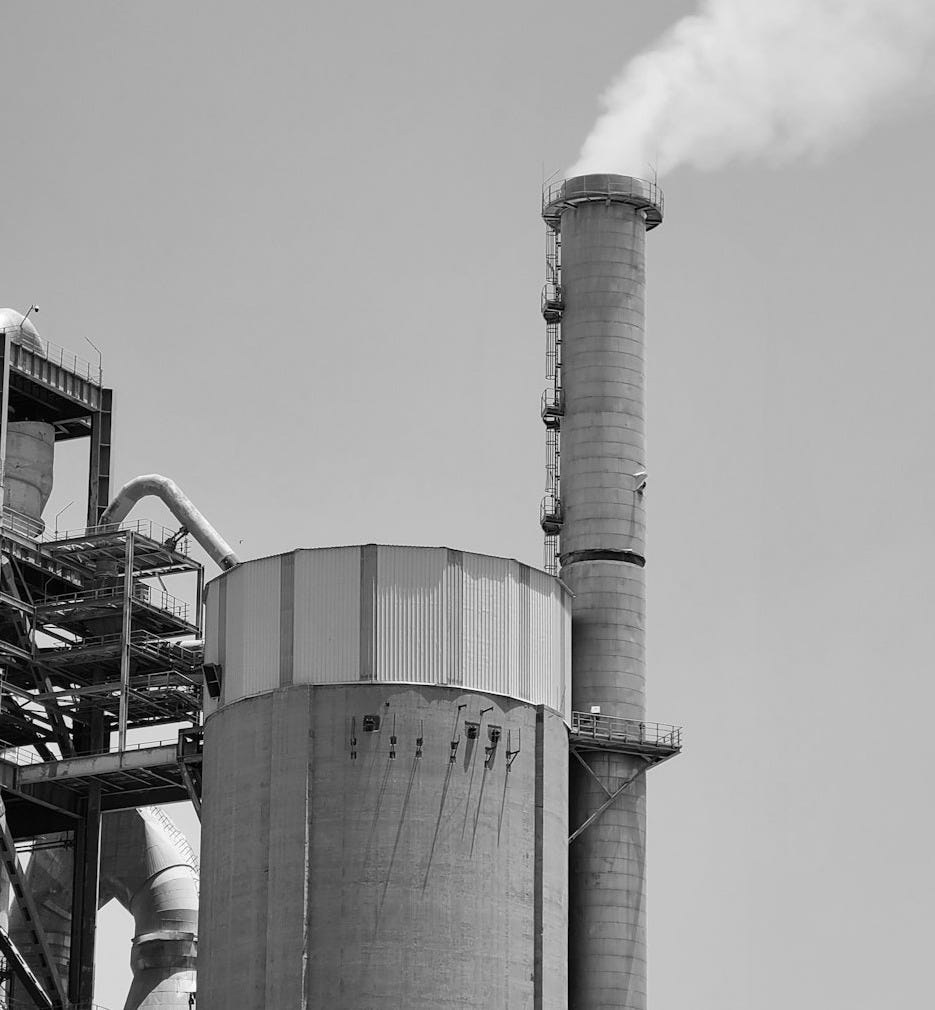
I agree with nuclear power, but what politicians and leaders around the world are and should be concerned about is the potential for global destruction when enhanced for non-energy related forms. Who is going to regulate nuclear power for AI? If you tell me, the (IAEA) International Atomic Energy Agency which is funded by 168+ member nations including American tax dollars is doing a fantastic job, then contact me immediately. I have some “ocean” front property for sale in Arizona.
With the rise of Super Technology and Artificial intelligence. Data centers, advanced manufacturing, and automation are rapidly increasing baseload requirements. Meeting that demand solely through new generation capacity will drive costs higher for consumers globally and strain grid infrastructures already operating near their limits. It will ensure nations that can afford it will have it, and nations that cannot be at the mercy of those that do.
Capturing and monetizing existing waste energy in all forms is one of the most capital-efficient ways to expand supply without increasing fuel input or emissions.
Image your 5-ton hvac-condenser unit on your home in Jacksonville Florida cooling your home. Now imaging the same unit heating your pool to a nice balmy 88F in winter, heating your home water and running your AC, all in one closed loop-controlled system. We at Scope are thinking about it, doing the theory, designs and engineering work, defining the cost value and how to scale properly without driving up capex for the thousands of different manufacture’s of components to deploy such systems. The parts are mostly already used in various forms; it is the sequencing and process that is inefficient.
While hundreds—if not thousands—of cleaner-technology startups ours included are entering the market, not all solutions are created equal. Solar and wind have a significant role, but both require significant upfront energy investment, continuous maintenance, land use, and periodic replacement as newer versions of the technology evolves. Wind installations can require nearly twice the upfront energy to manufacture and install a single wind turbine as it does to bring multiple oil or gas wells online, often delivering less consistent baseload and downstream power not to mention all the other proponents of consumable goods that “total renewable energy” cannot provide. Without natural gas, or crude oil, I would not be typing this on my Lenovo laptop, it would be done on a Smith Corona typewriter. You young folks may have to look that up. Additionally, you inevitability have the wind argument about being unsightly which I agree with, the blade graveyard accumulation, yes they are real, google it. Not to mention the Animal rights activist that will rally the issue of birds being killed, or marine life sonar interference. Solar has the same issues; acres of usable farmland converted to unusable and again unsightly. I think Elon Musk said it once that a hundred-mile square of land with solar could basically power America. That is great Elon! I propose far West Texas or the Mojave desert buy it! Truth is you cannot, because some idealist would be up in my face or yours calling me, you, or someone else a nut job, fascist, or worse because some ancient desert spider, or parasite would be wiped out. God forbid we kill a cockroach.
Geothermal energy presents a incredible value proposition where natural conditions allow, but those conditions are geographically limited. Large-scale deployment remains capital intensive, location-dependent, and difficult to replicate broadly. The Pacific Rim of Asia and to include the Ring of Fire from South America to Alaska and back down to Japan, Taiwan, etc. is loaded with natural Geothermal Potential. This issue again is not all potential is created equally. Many of those areas have high concentrations of H2S (hydrogen Sulfide), CO2, (Carbon Dioxide) which from an operator’s perspective makes lease operating expense cost go up. Most metals do not react well with high percentages of H2S which corrodes casing and tubulars necessary to extract heat from the earth. CO2 on the other hand is exactly what everyone has been screaming about for decades to include those activists, elected politicians, and Hollywood elites while they hop from jet to jet around the world demanding nations advance tight referendums on climate initiatives which drives everyday cost of items higher on the consumer. Then they get together annually at Davos and other places and scold the world population that we are destroying the planet. What California, Canada and many other states and countries will tell you is your “taxes” for gasoline, appliances and carbon output contribute to solving the environment problems. Dream on dreamer, your just paying elected officials to spew unsubstantiated nonsense so they can travel and have rubber chicken dinners and talk the right speech points to get campaign contributions for their next election round.
There are literally special interest groups from geothermal to hydrogen to wind that receive millions upon millions of your tax dollars in the name of grants that literally do nothing but allow them to put on conferences and have nice presentations on what is possible if we just all work together. Just look on LinkedIn, X, or other media source and follow the money. One group received over $100 million in 2023 from the previous U.S. administration handed out by the DOE attached to the ‘infrastructure law” of November 15,th 2021. It did nothing for small business research or development. Gave nothing to the small engineering firms to solve for a true need. It did make nice presentations and data platforms of condensed scientific conclusions and funds very pricey conferences and new professional network groups. But it didn’t solve anything.
It is up to the private sector, Heavy Industry, Tech, Food processing, O&G, Agriculture, Chemical, to reimagine energy demand, development solutions, and delivery, not governments.
Tell me would you rather have people that developed your modern-day conveniences build your needs and refined the processes to capitalize investment, spur growth and competition with competitive pricing, or the C-minus student that could not get a job at Google, Exxon, Dow Chemical, Meta, or and one of hundreds of top firms and had to settle for a government job which cares nothing about you the consumer and more on their departments budget numbers with no process of accountability. While I do not know the CEO’s of these companies and whether I like or dislike what they create, I will say they create solutions and drive business. Unlike most other influencers in whatever form, these companies create a product and technology that is tangible or has consumable value. Alexandria Ocasio-Cortez went from bartender to the U.S. Congress and sits on committees for Energy and health. Not picking on her, just an example.
I mentioned California. It is only because it could be one of the leaders driving geothermal, solar among others, but the constituents have elected to elect alarmist politicians and import oil from other nations (not all friendly either) without even considering buying natural gas or pipeline oil from their eastern neighbor states to lower prices and consumables. Without the need to adopt more regulations and insurmountable taxes on everything from lawnmowers to home thermostats to mileage taxes. All the while they have some of the highest oil and natural gas reserves in the world. If they untapped, un-regulated their existing resources along with Geothermal, Solar they could be net exporting power to other states north and east to Mexico and beyond. Those type elected leaders love going on news networks and social media blaming political conservatives regardless on knowing their position and decrying “conservatives hate the environment”. And we as your elected officials are going to fight to save your life, end your asthma, cancer risk, and COPD all while taking a bong hit off stage and enacting tougher laws and regulatory hurdles. Are the hills and Palisades still on fire? Asking for a friend.
From an investor’s standpoint, scalability and site flexibility are critical—and this is where many renewable models fall short. While here at our little company Scope we are aligned with geothermal and conventional energy, solar, pyrolysis, waste products and are working closely with fresh start up groups in other energy ideations, not all firms have the same “end use” business models. Some for baseload demands trying to scale to the gigawatt/terawatt power and some for 2–5-megawatt microgrid solutions or reserve-emergency industrial backup/baseload or industrial process savings. All are good investments where previously mentioned geology, site conditions and industrial conditions meets requirements.
EGS/AGS (Enhanced Geothermal Systems and Advanced Geothermal Systems) which are other geothermal firms manipulating recovery efforts in less natural geological areas by means like (Fracking) that started decades ago with oil and gas development are taking off, but replicating and a building firm baseline capex/opex costs model for drilling and completing to production has not been achieved thus far like modern day oil and gas extractions. One of the key reasons in my opinion is the lack of cooperation from different engineering backgrounds, product manufacturers, and service-related companies. The vast majority of geothermal or alternative energy people will not have reasonable discussions with other energy professionals particularly if they came from oil and gas sectors. This is fundamentally a roadblock of development. Great insights could be had if we just get rid of the inherent unconscious bias that exists in our professional community of scientist, engineers, supply chains, and manufacturing base.
To illustrate, Texas O&G basins (Midland and Delaware, Eagle-ford to Haynesville) all do horizontal fracturing the geology is different than the DJ, Bakken respectively in Colorado/Rockies, North Dakota, and the Appalachian regions (Marcellus Shale) of Pennsylvania, West Virginia and Ohio. The structure of drilling and completions and production however remain nearly identical with the exception of the fracturing engineering for spacing, cluster design, pressure, and proppant load for wellbore conductivity to recovery. Geothermal in all forms while making considerable continuous strides for the better is just now beginning to formulate patterns for low, medium, and high gradient recovery with cost base to payout recovery models.
Waste heat recovery, or Waste energy by contrast, is ubiquitous. Every industrial process—oil and gas, chemical, plastic manufacturing, food processing, waste treatment, maritime and municipal infrastructures—produces heat. That heat-waste is already paid in fuel costs, yet most of it is vented or dissipated unused. Converting waste heat into power or usable energy is not speculative in science; it is an optimization process and sequencing problem. This is the foundation of Scope Technology and the formulation of new thinking and engineering.
We focus on identifying waste energy sources, quantifying their recoverable value, and deploying capture-to-power solutions that integrate into existing infrastructure. The model is modular, site-specific, and partnership driven. In some cases, solutions are straightforward; in others, they require collaboration with industrial operators, equipment manufactures and supply chains, municipalities, government agencies, or regulators. Much as the traditional way oil and gas is extracted and developed today. The result is not just cleaner energy but improved operational efficiency and new revenue streams for partners and lower operating costs for companies.
To illustrate the scalability of this approach, consider a hypothetical community in the suburban Atlanta Georgia area, —an area without consistent wind, limited solar reliability, and no natural geothermal resources. No oil and gas prospects, traditional energy pipelines and terminals must be created as they are. Traditional renewables alone would struggle to support a self-sustaining microgrid. However, if waste heat were generated through new refuse wet-dry pyrolysis, or HTC (Hydrothermal Carbonization) at wastewater treatment facilities, food processing facilities, recycling centers, and even landfill sites then recovered heat can be converted into ORC or DSE direct power or energy delivery/storage. Combined; a meaningful portion of local demand could be met with a direct reduction in consumer prices currently. When layered with heat recovery from nearby local industries, factories of all types, commercial buildings, or other processing facilities, the system becomes viable.
Individually, these heat sources are often overlooked. Collectively, they form a diversified, resilient layered energy portfolio—one that reduces grid dependency, lowers operating costs, and creates predictable returns. For investors, this means infrastructure-style assets with long lifecycles, recurring cash flows, and lower exposure to commodity price volatility all the while contributing toward carbon capture, government-imposed mandates, and tax burdens.
The core insight is simple: Energy Waste is one of the largest unpriced assets in the global economy. Capturing it does not require waiting for breakthroughs or betting on unproven technologies. It requires disciplined execution, industrial partnerships, and a clear understanding of how energy systems actually operate. Most importantly recognizing the possibilities without bias or political ideology in the name of Liberal, Progressive, or Conservative. It just makes sense to think about all aspects of power needs. Developing a phased straightforward solution as business scales. It is not a choice of one versus another as the media, pundits, and climate activists propagate in every communication format. It is not one solution of what the most people know as “renewable energy” it is as mentioned layered systems of power generation in all forms combined with Waste capture, Waste recovery-reconvergence and reinstituted into other needs or cycles of power or process.
At Scope, we focus on imagining what is possible—and then building solutions that make economic sense. Conservative Environmentalism in this context meaning Conservation, is not about politics or restraint; it is about efficiency, stewardship of capital, and maximizing value from resources already in use. For investors, and governments, seeking scalable impact with real returns, waste heat recovery is not an alternative—it is an inevitability.