

Compromised America...
We must stand and change course against cultural uniformity back to Constitutional Ideals

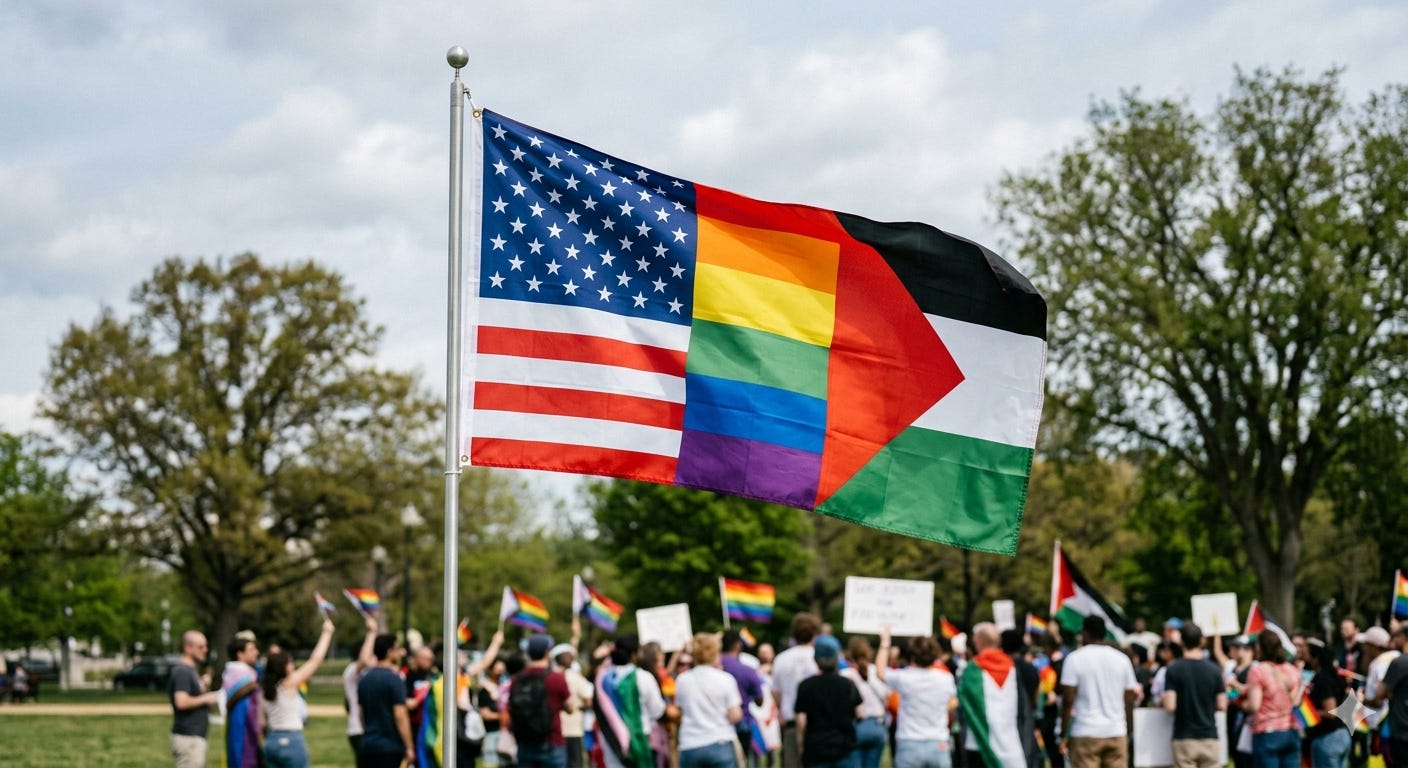
The American republic was founded on a set of principles that were both revolutionary and enduring: individual liberty, limited government, equality under the law, and a shared civic identity rooted in constitutional ideals rather than ethnic or cultural uniformity. These principles did not demand sameness, but they did require cohesion…, a common understanding of what it meant to be American. Over time, these values enabled the nation to grow, absorb new populations, and adapt to change without losing its identity. Today, however, many argue that America stands at a crossroads, where traditional values are increasingly scripted toward progressive ideologies, often in an effort to accommodate or appease rather than unify. The concern is not change itself, but that such change is occurring without a clear understanding of its long-term consequences on the identity of the republic.
This tension is not new. Throughout history, America has periodically struggled with the balance between assimilation and accommodation. In the late 19th and early 20th centuries, waves of immigrants from Southern and Eastern Europe arrived in unprecedented numbers. At the time, there were serious fears that these newcomers would not integrate into American society. Yet the dominant expectation remained assimilation: immigrants however, did learned English, participated in civic life, and adopted American cultural norms. Public education, military service, and industrial workforces all acted and thrived as unifying forces.
Contrast this with the latter half of the 20th century, particularly after the Immigration and Nationality Act of 1965 the (Hart-Cellar Act), which reshaped U.S. immigration patterns. Pre 1965, U.S. immigration favored Northern Europeans which was the principle of “like-minded standards” of immigration seekers since the early 1900’s. The post-1965 era coincided with a broader cultural shift toward multiculturalism, emphasizing the preservation of distinct cultural identities, family reunification which allowed multiple extensions of immigrants from Latin America and Asia. While rooted in a desire to respect diversity, this shift marked a departure from earlier expectations of full cultural integration without American assimilation.
The trajectory of civil rights policy reveals a shift away from the fundamental American principle of equal treatment under the law. The Civil Rights Movement of the 1950s and 1960s sought to ensure that all individuals were afforded the same opportunities regardless of background, culture or religion…, a vision rooted in fairness and merit. However, in the decades that followed, government policy increasingly emphasized group identity…, most notably through measures like Affirmative Action, Head Start, Food Stamps and Job Corps. All of these programs, designed in principle to create a more balance approached for the disadvantages between races at the time…, became multi-generational institutions to keep minorities dependent on government rather than self-governance or advancement by merit and hard work. Proponents claim these policies address historic inequities; critics have long warned that they undermine the goal of true equality by creating new divisions and privileging “group status” over individual merit. In reality, these approaches have weakened the progress achieved by the civil rights movement and similar reforms, replacing the ideal of colorblind justice with policies that encourage exclusion and societal resentment.
Since 2008, this trend has accelerated: rather than fostering inclusion, government has implemented policies that exclude, divide, and reward certain groups at the expense of others. This shift has not only diminished the principle of equal opportunity but has also eroded public trust in institutions. The aftermath of 9/11 further exemplifies this problem. While the majority Americans of all races-cultures, rallied behind the idea that “Never Again” should guide our actions, government responses were often inconsistent, and adopted policies and rhetoric aimed at avoiding offense to specific cultural or religious groups, rather than enforcing clear, uniform standards. Instead of protecting the American Nation, these actions have most often allowed extremism to flourish, as officials turn a blind eye to robust vetting and enforcement of immigration laws. This failure to uphold American values of equal treatment and accountability under law contributes to the growing sense of insecurity and division in society.
Over the last week, the Supreme Court issued a ruling that cuts through a lot of political noise and returns us to a basic constitutional idea: in America, the law is supposed to see citizens as individuals. At the center of the case was whether electoral districts should be drawn primarily on racial grounds. Drawing lines for representation is an unavoidable part of politics, but the Fourteenth Amendment’s Equal Protection Clause reminds government that it may not sort Americans into racial boxes to achieve a preferred outcome.
Personally, I have never been a fan of the Supreme Court whether liberal or conservative. I do not think most cases especially around social issues should make it to the highest court in the land. I believe that many states intentionally “punt the ball” in the premise of non-accountability. Meaning it’s easier to let a case reach the Supreme Court, rather than allowing the residents of the state to mandate desires though state legislation. On this case however, I will say great job for this ruling. My entire life of fifty-nine years, I have seen the erosion and have partaken in the same system of what should have been strengthening our resolve as Americans equally, rather than systematically identified by group and classified into “categories” based upon race, cultural-heritage, religion and sexual preference which drove a wedge between everyone, drifting us further apart.
Predictably, the ruling drew strong reactions from political leaders. Some, mostly Black leaders like Hakeem Jeffries called the Court “illegitimate,” while others like Rashida Tlaib, Ilhan Omar and alike warned the country was being thrown backward. But a constitutional argument should not depend on whether one party benefits this cycle. The real question is simpler: should government treat citizens as members of groups…, or as individuals with equal rights? Today most progressive democrats will side with stripping freedoms from individual self-governance for a more robust system of inclusion with forced government control and more restrictions. Whereas, the new younger republicans of today are attempting to restore the core constitutionally of freedoms as equals across the spectrum with simple message of accountability.
In a 6–3 decision, the Court reiterated a long-standing rule: legislatures may consider many legitimate factors when drawing maps, but race-based line-drawing is subject to the highest level of judicial review. That standard exists for a reason, history shows how easily race can be used as a political tool, and how quickly “representation” can turn into manipulation and voter control.
Recent debates over immigration provide another parallel. The balance between humanitarian concern and enforcement of immigration laws remains a central point of contention. Policies perceived as prioritizing accommodation over enforcement raise questions about long-term cohesion and stability. In the last six-months alone, fraud related state and federal programs just on immigration subsidies is estimated now at between 300-500 billion in just the last decade. Even with this data now available, polls will show disenfranchised legal U.S. citizens predominantly Black, and East and West coast legal Hispanics still supporting progressive candidates which contribute more time and energy, along with federally funded resources representing “illegals” of all cultures in their districts rather than legal residents.
Public safety is another area where ideology can override common sense. Whatever one’s politics, a basic duty of government is to enforce the law fairly and consistently, protect law-abiding residents, and hold repeat offenders accountable. In fact, prior to becoming President, Joe Biden was the architect of the Violent Crime Control and Law Enforcement Act of 1994, or a better know “The Three Strikes Law.” That principle was not “right”, “left”…, or even “center”, it is a prerequisite for liberty, safety and the rule of law. And the same logic applies to elections: when government starts assigning different rules or outcomes based on groups or identity, trust collapses.
Cultural and institutional shifts have also accelerated. Universities, corporations, and public institutions increasingly adopt diversity, equity, and inclusion initiatives. While framed to broaden opportunity, critics argue these approaches can prioritize identity over merit, representing a shift from traditional meritocracy or best qualified ideals. Elected representatives today conversely are ill-equipped with any understanding of how to run or manage a business, or interpret American History the Constitution along with Federal Laws, which makes them useless extensions for the very people they should be protecting.
The weakening of traditional institutions…, unity of family, religion, and local community, and incorporating fringed ideals like gender identity or secular ideals that puts a minority percentage of individuals “inclusions” into the conversation to shape the common structure of most Americans, further complicates this transformation and is extremely dangerous. Historically, these structures provided stability and continuity, helping sustain a shared moral and civic framework toward life, liberty and the pursuit of happiness.
Yet America has always evolved. The expansion of rights and inclusion of new voices are central to its history. The challenge is ensuring that such progress remains anchored to the principles that unify the nation rather than fragment it.
“Compromised America” reflects a broader concern: that in the pursuit of inclusivity and progress, the nation risks drifting from its foundational identity. History suggests that compromise can strengthen a nation when grounded in principle…,but when it becomes appeasement without limits, it may very well erode the very framework it seeks to preserve.
Until next time,
Chris
Excellent analysis. This make me think. Are there any historical references of countries “going back to basics” as it relates to unity as a nation? (I guess you could say South Africa or El Salvador as imperfect examples) Sometimes I feel the diatribe in the US becoming wearisome and people just wanting to get on with their lives with a plan that improves the US in the essentials. I no longer think of the USA I’m building for me but for my kids who are fully assimilated multicultural Americans. The way it started.
Keep writing.